
 CART
CART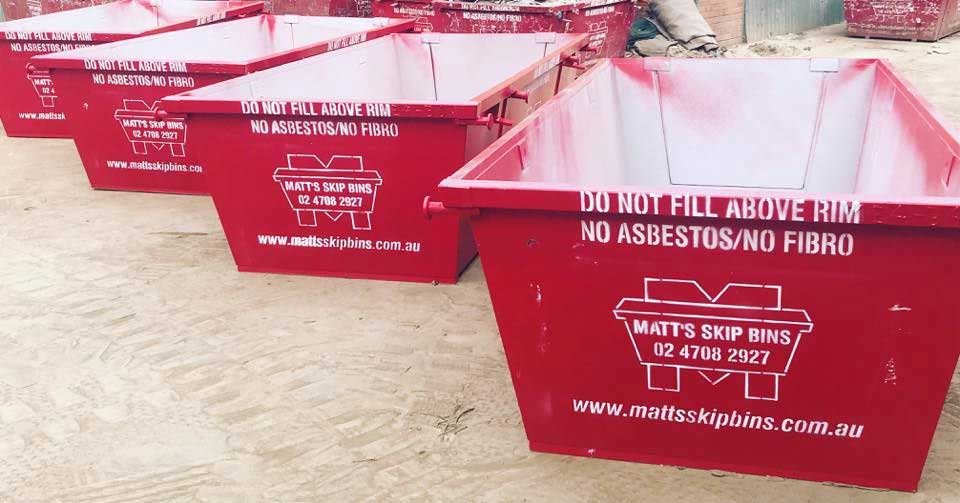
21 Sep • 7 min Read Skip Bin or Hooklift Bin? How to Choose the Right One for Your Western Sydney Project
A skip bin suits most residential and trade projects in Western Sydney. A hooklift bin suits large-volume, multi-trade jobs a skip bin isn’t sized for. The right choice depends on project size, site access, and placement.
What Is the Difference Between a Skip Bin and a Hooklift Bin?
| Skip Bin | Hooklift Bin | |
| Delivery mechanism | Marrel skip bin truck lifts the bin on and off with chains | Hydraulic hook arm lifts one end, then the bin rolls on and off the truck |
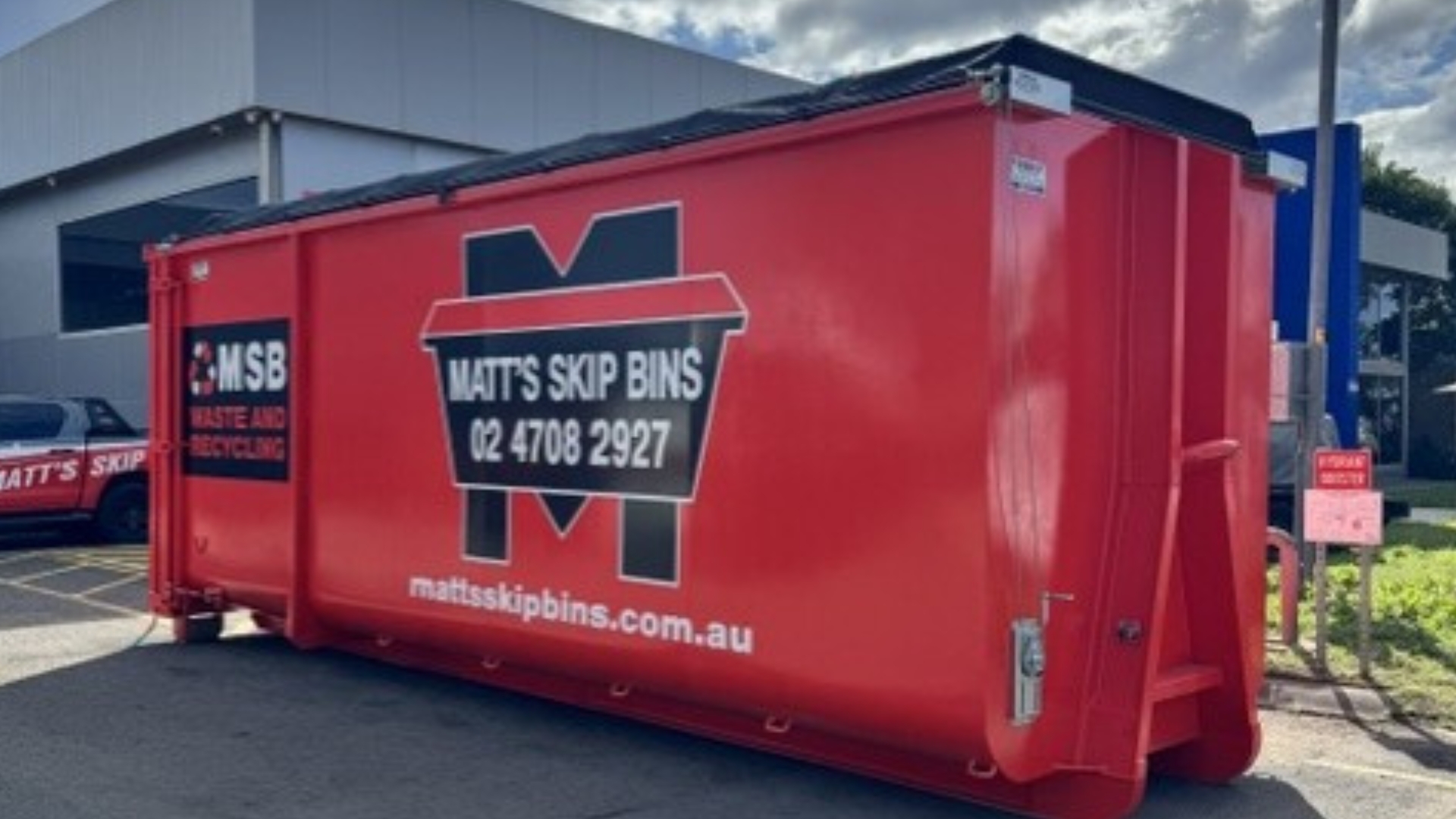
| Size range | 2m³ to 12m³, across 8 sizes | Starts around 4m³ and scales well beyond a standard skip up to around 40 cubic metres with Matt’s Skip Bins providing 12m, 20m and 30m hooklift bins |
| Best suited to | Residential and single-trade jobs | Demolitions and multi-trade construction sites |
| Loading style | Filled from above, over the side. Some with wheelbarrow access | Rear-opening tailgate, easy access for a bobcat |
| Footprint on-site | Compact and low profile, only taking up around a carspace at most. | Longer chassis, larger footprint, needs a longer straight run-in. Hook bins take up more space also. |
The mechanical differences drive everything else. A marrel skip bin truck needs clear space above the bin to swing its arm through the lift. A hooklift truck needs less overhead clearance but more room to roll the bin into place. That trade-off, more than volume, usually decides which bin type fits your site.
A skip bin’s open top makes it easy to fill by hand, but awkward for heavy machinery to load directly. A hooklift bin’s rear-opening tailgate makes it a better fit when a bobcat or excavator does the loading rather than a person with a wheelbarrow. That’s often the more useful way to think about the choice than volume alone, since how the waste actually gets into the bin, and who’s doing the loading, tends to matter more.
Which Bin Type Suits Which Project in Western Sydney?
| Project type | Recommended bin | Why |
| Bathroom renovation | 3m³ or 4m³ skip bin | Tiles, plasterboard, and fixtures rarely push past the mid-size range |
| Roof replacement | 6m³ or 8m³ skip bin | Tiles and battens are dense, weight is the real constraint, not volume |
| Landscaping or garden clean-up | 4m³ to 9m³ skip bin | Soil and green waste are heavy, weight limit is often reached before the bin looks full |
| Knock-down rebuild, demolition, or multi-trade site | Hooklift bin | Sustained daily volume across several trades exceeds what a single skip bin can absorb |
Duration isn’t always the deciding factor here, as people often assume. Matt’s already offers extended skip bin hire, including long-term hire up to three months for trade customers, so a job running for weeks doesn’t automatically need a hooklift bin. What pushes a project toward hooklift is the sheer daily volume of a multi-trade site, not how long the job takes.
It’s also worth thinking about this by trade rather than just by project type. A solo builder doing a kitchen reno or a granny flat fit-out is almost always a skip bin job, sized around cabinetry offcuts, plasterboard, and packaging. A roofer working alone on a single dwelling is the same story, just sized up for the weight of tiles and battens rather than the volume. Landscapers tend to fall into the same bracket unless they’re clearing a large block, in which case volume creeps up fast because soil and turf are dense even in small quantities.
It shifts on multi-trade sites, where a builder, a plumber, an electrician, and a plasterer all generate waste into the same bin over several weeks. That’s the pattern that pushes a job toward a hooklift bin, not the size of any one trade’s waste on its own.
If your project doesn’t sit neatly in one of these categories, or you’re not confident about the volume you’ll generate, it’s worth a quick call to Matt’s team before you book. Getting the size wrong is an easy, and avoidable, way to end up paying for a second bin.
How Does Site Access Affect Which Bin Type You Can Use?
- Check overhead clearance. Marrel skip bin trucks need vertical clearance above the placement point for the arms and chains to operate, typically in the six- to seven-metre range as a general industry guide, though the exact figure depends on the truck.
- Check run-in distance. Hooklift trucks typically need less overhead clearance, but they need a longer, straighter run to roll the bin into place.
- Look for overhead obstructions. Low-hanging power lines, mature trees, or a carport roof can rule out a Marrel skip bin truck, pushing you toward a hooklift bin instead.
- Look for driveway length and width. A narrow or short driveway that can’t fit a long straight run-in may rule out a hooklift bin, pushing you toward a skip bin instead.
- Corner blocks and wider driveways usually give the most flexibility to choose based on volume rather than access.
Older parts of Western Sydney tend to deliver the trickiest combinations of these constraints. Homes with mature street trees, blocks with overhead power lines running across the driveway, and carports with a low roofline are common enough that it’s worth walking your own site with these things specifically in mind, rather than assuming the truck that delivered your neighbour’s bin will work the same way at yours.
Site access requirements depend on your specific property layout. Matt’s will assess your site during booking confirmation.
Does Bin Type Affect Where You Can Place It: Driveway, Street, or Site?
| Placement | Skip bin | Hooklift bin |
| Driveway or lawn (your own property) | No permit needed | No permit needed |
| Street or other council land | Permit required from your local council | Permit required from your local council; a larger exclusion zone may apply due to the bigger footprint |
Matt’s services Penrith, the Blue Mountains, Hawkesbury, Blacktown, the Hills District, Camden/Macarthur, and Liverpool, and permit processes aren’t identical across all of them. Blue Mountains Council, for example, applies heritage and environmental protections in some areas that can affect where a bin sits on a street, and Hawkesbury has flood-risk considerations that can restrict placement in certain zones. Neither of those is a reason to avoid booking; they’re just a reason to have the conversation with Matt’s team early if your property falls into one of those areas. If you’re on a shared or strata driveway, you’ll likely need body corporate sign-off as well, regardless of what the council requires.
Council permit requirements vary by Local Government Area. Always confirm with your local council before placing a bin on a street or public land.
Are Weight Limits the Same for Skip Bins and Hooklift Bins?
Not exactly, and the details matter more than most people expect. At Matt’s, weight limits actually come down to waste type rather than a flat per-bin figure:
| Waste type | Weight limit |
| General waste | 180kg per cubic metre |
| Green waste | 180kg per cubic metre |
| Dirt and clay | No weight restriction |
| Bricks and concrete | No weight restriction |
| Mixed building waste | No weight restriction |
Hooklift bins follow the same underlying logic (weight capacity is a function of waste type and chassis rating, not the bin type label), but if you’re not sure how a specific hooklift booking would be priced or limited, that’s a conversation to have directly with Matt’s team.
Whichever bin you choose, it’s worth thinking about density before volume. Dense materials like soil, tiles, and bricks fill the weight allowance long before the bin looks full.
Weight limits and pricing are subject to change. Contact Matt’s Skip Bins for current rates and specifications.
Can You Put the Same Waste Types in a Hooklift Bin as a Skip Bin?
Largely yes. The same rules apply regardless of bin size or type.
Not accepted in any bin:
- Food waste
- Liquids
- Chemicals
- Oils
- Paints
- Fire extinguishers
- Gas bottles
Accepted, but with an extra fee:
- Mattresses
- Tyres
Asbestos is a special case. It isn’t accepted in standard waste bins, but Matt’s offers dedicated asbestos-only bins for that specific waste stream, so it’s not a dead end, it just needs to be booked as its own category.
None of this changes between a skip bin and a hooklift bin. The bin type is a size and access decision, not a waste-planning one, so choosing hooklift over skip (or the other way around) doesn’t affect what you’re allowed to load into it.
Is a Hooklift Bin More Expensive Than a Skip Bin in Western Sydney?
Matt’s pricing for either bin is driven by three things: the size you book, the delivery location (further-out suburbs can attract a travel fee), and how long you keep it. As a reference point, larger bins typically work out cheaper per cubic metre than smaller ones, but the best way to know your number is a quick quote from Matt’s team.
Because a hooklift job is a different scale of project by nature, it’s reasonable to expect the total cost to land higher than a small skip bin hire, simply because you’re paying for more capacity and typically a more involved delivery. But the real number depends on your specific job, so the most useful next step is to get a quote rather than work off a general rule of thumb.
Weight limits and pricing are subject to change. Contact Matt’s Skip Bins for current rates and specifications.
Which Bin Type Is Right for Your Project? A Quick Decision Guide
- Choose a skip bin if your project is a residential clean-out, a single-trade renovation, or generates less than roughly 10m³ of waste. We offer flexible hire terms, including long-term hire for tradies up to three months with no extra charges or monthly fees. Give us a call to discuss what suits your project.
- Choose a hooklift bin if you’re running a multi-trade site, a demolition, or a knock-down rebuild generating sustained daily waste across several trades at once, more than a single skip bin is sized to absorb.
- Still not sure? Call Matt’s. We can confirm bin type before booking, and adjust it before delivery if your circumstances change.
Council permit requirements vary by Local Government Area. Always confirm with your local council before placing a bin on a street or public land.
Get the Right Bin The First Time
Bin type is one of those decisions people only face once or twice, which is exactly why it’s easy to second-guess. The good news is you don’t need to nail it from a blog post. Matt’s team deals with this exact question every day across Western Sydney, from tight Penrith driveways to acreage blocks out past Camden, and they’ll confirm the right bin for your site and project before anything gets booked.
Ready to lock in your bin? Call Matt’s Skip Bins on 02 4708 2927 or book online to confirm your bin type and get a quote for your Western Sydney project.
Frequently Asked Questions
What is the difference between a skip bin and a hooklift bin?
A skip bin is lifted on and off the truck by a marrel skip bin body with chains, while a hooklift bin is loaded with a hydraulic arm that lifts one end and lets the bin slide on. Hooklift bins are generally used for larger-volume, multi-trade jobs.
Which bin type is best for my project?
Skip bins suit residential clean-outs and single-trade renovations under roughly 10m³. Hooklift bins suit demolitions, knock-down rebuilds, and multi-trade construction sites generating sustained daily waste.
Can I put a skip bin on my driveway without a permit?
Generally yes, for a standard residential driveway or lawn. If the bin needs to go on the street or other council land, you’ll need a permit first. Shared or strata driveways may also need separate body corporate approval.
What is the weight limit for a skip bin?
It depends on waste type, not bin size alone. General waste and green waste bins carry a limit of 180kg per cubic metre, while dirt and clay, bricks and concrete, and mixed building waste bins don’t carry a weight restriction.

